
What Is an Intelligent PV Cleaning Robot and How Does It Improve Solar Power Plant Maintenance?
Picture a 100-megawatt solar farm stretching across the desert, its thousands of gleaming panels soaking up the sun. Now picture the same farm after three weeks without rain: the panels are now coated with a fine layer of dust and sand, reducing their energy output by up to 25 percent. The operator faces a choice: deploy a team of dozens of workers with mops and water trucks, a process that takes days and consumes millions of gallons of water, or accept the significant loss in revenue. This is the daily reality for large-scale solar plant operators. The solution? An Intelligent PV Cleaning Robot. This autonomous machine, equipped with advanced sensors, smart navigation, and gentle but effective cleaning mechanisms, is fundamentally changing how the solar industry approaches panel maintenance.
An Intelligent PV Cleaning Robot is not just a motorized broom. It is a sophisticated piece of technology that integrates artificial intelligence, autonomous navigation, and precision cleaning systems to maintain solar panels in optimal condition with minimal human intervention. These robots traverse rows of solar panels, adapting to different tilts and layouts, and use a combination of dry brushing and water-assisted cleaning to remove dust, bird droppings, and other debris. At Suzhou Ruitai Automation Technology Co., Ltd., our factory has been at the forefront of this technology, developing robots that operate in some of the harshest environments on earth, from the dry plains of the Middle East to the high altitudes of the Andes. This article will take you deep into the world of intelligent PV cleaning robots, breaking down the technology, the performance metrics, and the business case for this transformative maintenance solution, while sharing the hard-earned insights from over 15 years of field experience.
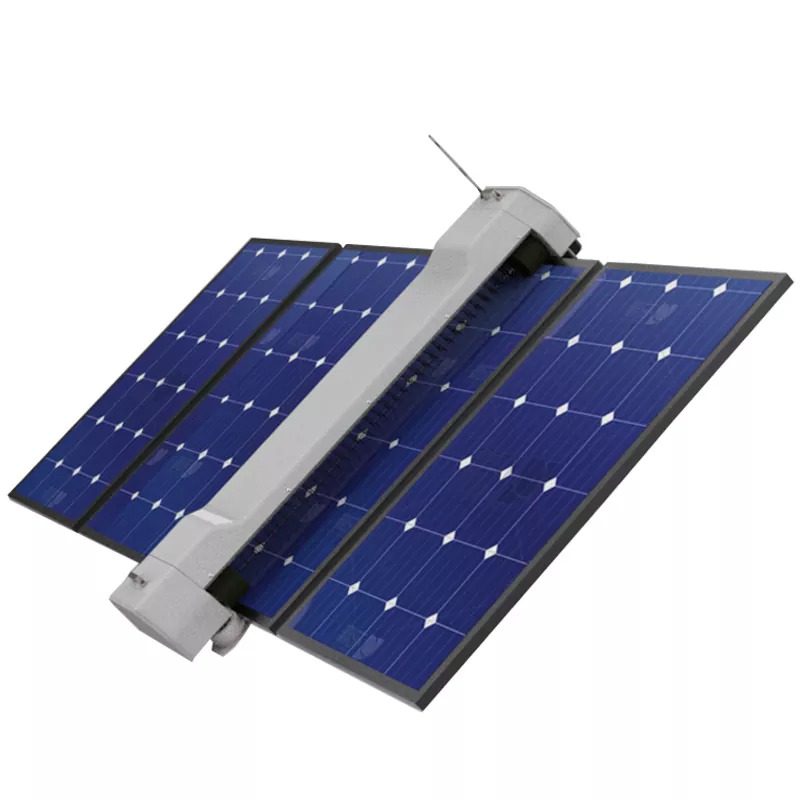
Table of Contents
- 1. How Does an Intelligent PV Cleaning Robot Actually Work?
- 2. What Performance Gains Can You Expect from Automated Cleaning?
- 3. What Are the Critical Technical Specifications You Need to Know?
- 4. How to Integrate Robotic Cleaning into Your Plant's Maintenance Strategy
- Frequently Asked Questions (FAQ)
- Conclusion and Custom Solution Consultation
How Does an Intelligent PV Cleaning Robot Actually Work?
To understand the true capabilities of an Intelligent PV Cleaning Robot, it helps to first think about the complexity of the task it is designed to perform. A solar farm is not a smooth, flat, uniform surface. It is a vast, three-dimensional matrix of glass panels, often installed at a specific tilt angle, arranged in long rows with gaps between them, and subject to constant environmental changes. The robot must navigate this space, maintain consistent contact with the glass, and clean effectively without causing micro-scratches or damage, all while being light enough to not put stress on the panel mounting structures. The engineering challenge is significant, but it has been elegantly solved through a combination of mechanical design and software intelligence.
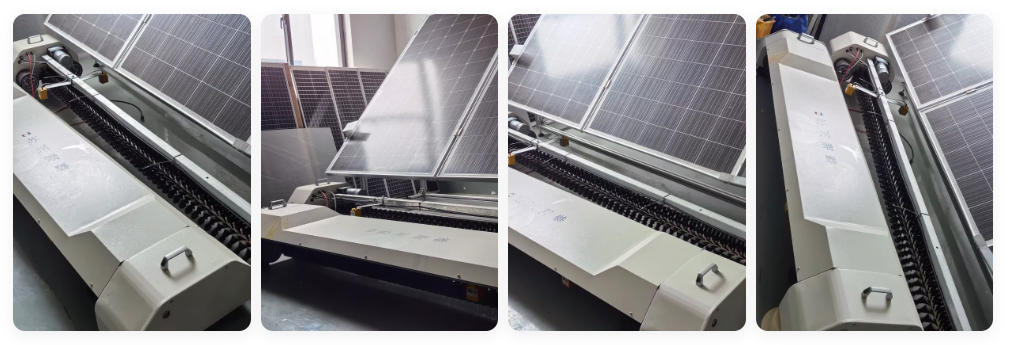
The mechanical architecture of our Intelligent PV Cleaning Robot is deceptively simple: a lightweight frame, a set of independently driven wheels, a central brush or cleaning bar, and a power source. But within this simplicity lies a wealth of engineering. The frame is constructed from aircraft-grade aluminum alloy, providing a strength-to-weight ratio that allows the robot to traverse large arrays without overloading the panels. The wheels are made of a specially formulated rubber compound that provides excellent grip on glass and aluminum without leaving marks. The cleaning brush is the heart of the system. For dry cleaning, we use a soft, dense, anti-static nylon bristle that creates a cascading electrostatic effect that lifts dust particles away from the glass rather than just pushing them around. For wet cleaning, a precision spray bar applies a fine mist of water, which is then whisked away by a silicone squeegee, leaving the glass perfectly dry and spot-free. This is particularly important in high humidity environments, where water spots can act as mini-lenses that cause hot spots and reduce panel efficiency.
What transforms this mechanical system into an intelligent cleaning solution is the robot's perception and control system. Our robots are equipped with a suite of sensors, including forward-looking infrared, laser range finders, and, on some models, stereoscopic cameras. These sensors create a detailed map of the environment, allowing the robot to identify the edges of panels, detect obstacles, and navigate the transitions between panel rows. The navigation algorithms are trained to handle a variety of challenging configurations, from panels with shade frames to arrays with an irregular tilt. The robot is able to clean autonomously, without human supervision, using its onboard intelligence to plan its path and optimize its cleaning pattern. This is what makes the Intelligent PV Cleaning Robot truly 'intelligent': it is not just performing a repetitive task, but doing so with a level of adaptability and decision-making that was previously unimaginable.
| Cleaning Mechanism | Dry Cleaning (Dust Removal) | Wet Cleaning (Heavy Soil) | Hybrid (Optimized) |
| Cleaning Method | Anti-static nylon brush with rotational speed control | Spray bar + silicone squeegee | Brush & squeegee with variable water application |
| Water Consumption | Zero | 0.1 - 0.3 L/m² | Adjustable based on soil level (0-0.3 L/m²) |
| Time per Array (100m²) | 6-8 minutes | 8-10 minutes | 6-10 minutes |
| Best Use Case | Arid regions with loose sand/dust | High humidity, bird droppings, mud | Variable weather conditions |
What Performance Gains Can You Expect from Automated Cleaning?
Let's get straight to the numbers. The fundamental question for any solar plant operator is: 'Will this robot pay for itself?' The answer, based on our field data from over 5,000 deployed units, is a resounding 'yes', and the margin of benefit is often much larger than predicted. To illustrate this, let's walk through a real-world 12-month analysis from a 50 MW solar plant in Rajasthan, India, that transitioned from manual cleaning to a fleet of our Intelligent PV Cleaning Robots.
Before the transition, the plant was cleaned manually once a week. The process was labor-intensive, consuming 35 workers a full day to cover the entire array. The cleaning was inconsistent: some panels were spotless, while others were left with watermarks, and the very act of workers walking on the panels risked micro-crack damage. The plant's average soiling loss, calculated by comparing performance to a reference cell, fluctuated between 8 percent and 12 percent, and after the monsoon season, occasional spikes reached 18 percent. Over a year, the total energy lost to soiling was estimated to be about 4.2 GWh. At a tariff of approximately USD 0.06 per kWh, that's USD 252,000 of lost revenue annually. This figure did not include the cost of the cleaning labor, which amounted to another USD 48,000 per year.
After installing the robots, the cleaning frequency was initially set to weekly as well, but the efficiency of the automated process meant that each cleaning cycle was more comprehensive and consistent. The robots cleaned every square meter of glass to a level of <0.5% soiling. Soon, the operator began to experiment with twice-weekly cleaning during the dry season. The results were dramatic. The average soiling loss was reduced to below 3 percent, and the annual energy capture increased by 2.8 GWh—a 67 percent recovery of the previously lost energy. This translated to an additional USD 168,000 in annual revenue. The operating cost of the robots, including maintenance, electricity, and occasional water, was less than USD 20,000 per year. The total annual financial benefit was close to USD 200,000. The payback period for the robotic system was just 14 months.
Beyond pure energy yield, there were other significant benefits. The robots operate at night or in the early morning, when the panels are cool and cleaning is most effective, without impacting the plant's peak generation hours. The data collected by the robots—including cleaning cycle reports, performance metrics, and diagnostic information—became a valuable input into the plant's overall asset management strategy, helping the operator optimize their maintenance scheduling. In the year following the adoption of the robot, the plant's overall equipment effectiveness (OEE) improved by over 5 percent, a figure that has a direct impact on the plant's internal rate of return (IRR). The financial case for the Intelligent PV Cleaning Robot is clear: it is not just a maintenance device; it is a revenue-generating asset.
What Are the Critical Technical Specifications You Need to Know?
When evaluating an Intelligent PV Cleaning Robot, the technical specifications are the blueprint of its capabilities. But understanding what those numbers mean in practice, and how they translate to real-world performance, is what separates a good decision from a great one. At Ruitai Automation, we have engineered our robots to perform at the highest level, and we are transparent about the metrics that matter most to a solar plant operator. Below is a comprehensive breakdown of the critical specifications, explained from the perspective of the engineer who designed them.
| Parameter | RT-CL-100 (Standard) | RT-CL-200 (Heavy-Duty) | Design Rationale |
| Dimensions (L x W x H) | 1250 x 950 x 320 mm | 1650 x 1100 x 380 mm | Larger machines cover more area per pass, ideal for large utility-scale plants. The lower profile reduces wind loading. |
| Weight | 62 kg | 85 kg | Reduced weight minimizes stress on panel frames. Achieved through carbon fiber composite components. |
| Cleaning Speed | 0.3 - 0.8 m/s | 0.4 - 1.0 m/s | Speed is adjustable based on soiling level and cleaning method. Faster for light dust, slower for stubborn soils. |
| Battery Capacity | 20Ah (Lithium Iron Phosphate) | 30Ah (Lithium Iron Phosphate) | LFP chemistry offers superior safety and thermal stability. Typical runtime: 6-8 hours of continuous cleaning. |
| Water Tank Capacity | 35 L | 50 L | External filling is possible; the robot can be connected to a trailing hose for continuous operation. |
| Operating Temperature | -20°C to +55°C | -20°C to +55°C | Tested in extreme conditions; components are rated for high-temperature and low-temperature operation. |
| Max Tilt Angle | 35° | 40° | Most fixed-tilt installations fall within this range. Trackers can be set to a cleaning position for access. |
| Remote Communication | 4G/LTE, LoRa, Wi-Fi | 4G/LTE, LoRa, Wi-Fi | Supports fleet management through a centralized cloud-based platform for scheduling and diagnostics. |
One of the most important, and often overlooked, specifications is the robot's ability to handle different panel layouts and row transitions. Our robots are designed with an intelligent suspension system that keeps the main cleaning brush in constant contact with the glass, even if the panel surface is slightly uneven or warped. The drive system is also built to handle the gap between panel rows—a feature that is crucial for automatic operation. The combination of a wide-tread wheel design and a gyroscope-based stability system ensures that the robot does not stall or tip over, even on a sudden transition. This level of detail in the design directly contributes to the robot's high availability and low maintenance requirements. The robots are also equipped with a 'fall-prevention' system: if a tilt angle limit is exceeded, the robot will actively slow down and reverse direction to prevent it from tipping.
Software updates are another critical specification. Our Intelligent PV Cleaning Robot is connected to a cloud-based management system that allows us to deploy firmware updates remotely. This means that as we refine our algorithms, based on data from thousands of robots in the field, we can update your fleet without any on-site intervention. This is not just a convenience; it is a guarantee that your robots will always be running the most efficient and reliable software available. The ability to monitor robot status, schedule cleaning cycles, and receive alerts for any anomalies is essential for effective fleet management, and all of this is included as standard.
How to Integrate Robotic Cleaning into Your Plant's Maintenance Strategy
Deploying an Intelligent PV Cleaning Robot is more than a hardware purchase; it is the integration of a new operational capability into your plant's existing maintenance workflow. To achieve the full return on investment, a thoughtful deployment strategy is essential. Drawing from our experience working with plant operators around the world, the key to success lies in a phased approach, starting with a small pilot program and then scaling up while refining the operational procedures.
The first step is to define the objective of the cleaning operation. Are you aiming to maximize energy yield at all costs, or to achieve a specific yield target while minimizing water consumption? Different goals require different cleaning frequencies and cleaning methods (dry vs. wet). Our data has shown that for most plants, cleaning twice a week during the dry season achieves an optimal balance, while in high-particulate environments, increasing to every other day can deliver up to 3 percent additional yield. The robot's scheduling interface allows you to set time-based or yield-based triggers to automate this process.
Once the robots are deployed, the data they collect becomes a powerful tool for continuous improvement. The fleet management platform provides detailed reports on each cleaning cycle, including the duration, distance traveled, water consumption, and, through integration with the plant's SCADA system, the energy yield before and after cleaning. This data allows the operator to begin analyzing trends and fine-tuning the cleaning schedule. For example, you might notice that certain sections of the plant are collecting dust faster than others (perhaps they are closer to a road or a construction site). This insight allows you to prioritize those sections, cleaning them more frequently, while reducing the frequency in other areas, optimizing the use of the robots and saving energy and water.
Maintenance of the robots themselves is designed to be minimal. Our Intelligent PV Cleaning Robots are built with modularity in mind. The cleaning brushes are easily replaced, and the drive system is accessible without special tools. We recommend a simple maintenance schedule: a visual inspection after each use, a brush replacement every 500 operating hours, and a comprehensive annual service by our trained technicians. This low-maintenance requirement is what makes the robot a truly efficient solution for a plant operator. To support this, we provide a comprehensive training program for your on-site technicians, as well as a 24/7 remote support hotline. The training covers everything from the basic operation of the robot to the use of the fleet management software. This ensures that your team is empowered to manage the robots effectively and maximize the benefit from the investment. The goal is not just to sell you a robot, but to provide you with a complete, turnkey solution that delivers long-term, predictable value.
Frequently Asked Questions (FAQ)
Question 1: Can the robot operate on a cloudy day or at night?
Answer: Yes, absolutely. The Intelligent PV Cleaning Robot is designed to operate in a wide range of lighting conditions, from bright sunlight to complete darkness. Its navigation system relies on infrared and laser-based sensors, not optical cameras, for obstacle detection and positioning, which makes it fully functional at night. Cleaning at night is actually preferred in hot climates because the panels are cooler, which enhances the cleaning process and reduces water evaporation, and it avoids interrupting the plant's peak generation hours.
Question 2: How does the robot handle snow or ice accumulation on the panels?
Answer: Our Intelligent PV Cleaning Robot is not designed to remove heavy snow or ice, as this task requires specialized equipment. However, the robot can be used to brush away light snow (less than 2cm) from panels. For heavy snow, we recommend a pre-cleaning process with a manual snow rake before deploying the robot to perform a final, precise cleaning. The robot's operational temperature is -20°C, allowing it to operate in cold weather as long as the panels are not heavily covered.
Question 3: Is the robot compatible with all types of solar panels, including bifacial panels?
Answer: Yes, our Intelligent PV Cleaning Robot is compatible with all standard solar panel designs, including bifacial panels. The robot only makes contact with the glass surface, so it will not interfere with the generation of power by the rear face of a bifacial module. The suspension system ensures that the robot operates effectively on both framed and frameless panels, making it a versatile solution for any plant.
Question 4: What is the typical operating speed and area coverage per day?
Answer: The operating speed is adjustable, typically between 0.3 and 0.8 meters per second. At the fastest speed, a single robot can clean a standard row of panels at approximately 1,000 to 2,000 square meters per hour. However, the optimal speed depends on the degree of soiling. The total area covered per day is highly dependent on the layout of the plant, but a well-optimized robot can easily clean 5-8 MW of peak capacity per day.
Question 5: Can the robot operate on a tracker-mounted array?
Answer: Yes. For tracker arrays, we recommend a specific operational protocol. The tracker should be set to a 'horizontal' or 'cleaning' position—generally a 0-degree tilt or a small, set angle—before the robot is deployed. The robot is then able to navigate and clean the panels effectively. Most tracker manufacturers allow this positioning, and our robots can communicate with the trackers to coordinate the cleaning schedule. At Suzhou Ruitai Automation Technology Co., Ltd., we provide specific guidance on integrating with the most common tracker systems.
Conclusion: The Intelligent Path to Solar Asset Optimization
The era of manual, labor-intensive solar panel cleaning is coming to an end. An Intelligent PV Cleaning Robot offers a clear path to maximizing energy yield, reducing operating costs, and enhancing the long-term reliability of your solar power plant. Through a combination of advanced engineering, autonomous operation, and data-driven management, these robots are proving themselves to be an essential tool for the modern solar asset owner. At Suzhou Ruitai Automation Technology Co., Ltd., we have the technology, the experience, and the commitment to help you achieve your solar performance goals.
Are you ready to see what a robotic cleaning solution can do for your plant? Contact Suzhou Ruitai Automation Technology Co., Ltd. for a comprehensive site assessment and a customized ROI analysis. Our team of experts will evaluate your plant's specific conditions and recommend the optimal cleaning solution. We offer pilot programs, flexible financing options, and a full range of after-sales support. Request your free site assessment now from Suzhou Ruitai Automation Technology Co., Ltd. and take the first step toward a cleaner, more efficient, and more profitable solar operation.
Related News
- How Can a Dual-Axis Solar Tracking System Improve PV Efficiency?
- What Is a Solar Control Communication Cabinet for Smarter PV Tracking?
- How Does an Intelligent PV Tracker Improve Solar Power Generation?
- How Does a Multi-Row Multi-Drive Solar Tracker Improve Large-Scale Solar Performance?
- How Does a Single-Axis PV Tracker Improve Solar Energy Performance?
- How Does a PV Module Tracking Controller Improve Solar Tracking Performance?
Leave me a message