
Solar power plants are becoming larger, more automated, and more dependent on real-time communication between field equipment and centralized monitoring platforms. In a tracking-based photovoltaic system, accurate panel movement is only one part of the challenge. Operators also need dependable data transmission, coordinated control, rapid fault response, and protection against changing weather conditions. A Solar Control Communication Cabinet helps connect these requirements by acting as an important communication and control layer between tracker-level devices and higher-level monitoring systems.

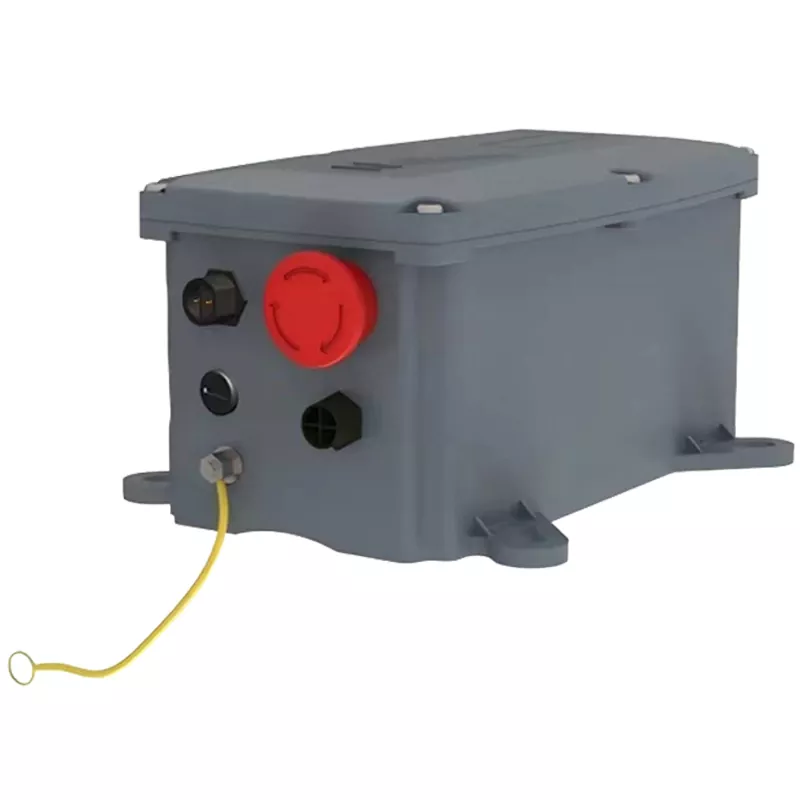
A Solar Control Communication Cabinet is designed to coordinate communication and control within an intelligent photovoltaic tracking system. It can collect operating information from tracker controllers, transmit commands, support remote monitoring, and help coordinate protective operating modes. For solar developers and operators, the right communication cabinet can simplify system management, improve response to abnormal conditions, reduce unnecessary field intervention, and provide a more structured foundation for large-scale PV automation.
- What Is a Solar Control Communication Cabinet?
- Why Does Communication Matter in Solar Tracking?
- How the Communication Cabinet Fits Into a PV Tracking System
- Core Functions That Solve Common Solar Plant Challenges
- Key Benefits for Solar Developers and Operators
- What Should Buyers Consider Before Deployment?
- Environmental Reliability in Real Solar Projects
- Communication Cabinets and Long-Term O&M
- Suzhou Ruitai Automation Technology Co., Ltd. and Intelligent PV Control
- Frequently Asked Questions
- Conclusion
What Is a Solar Control Communication Cabinet?
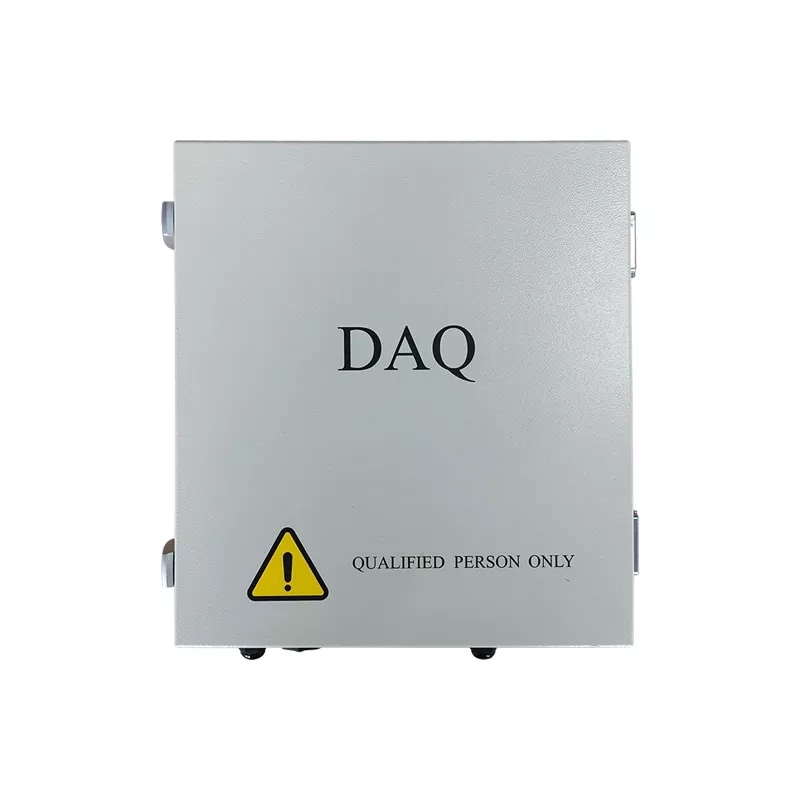
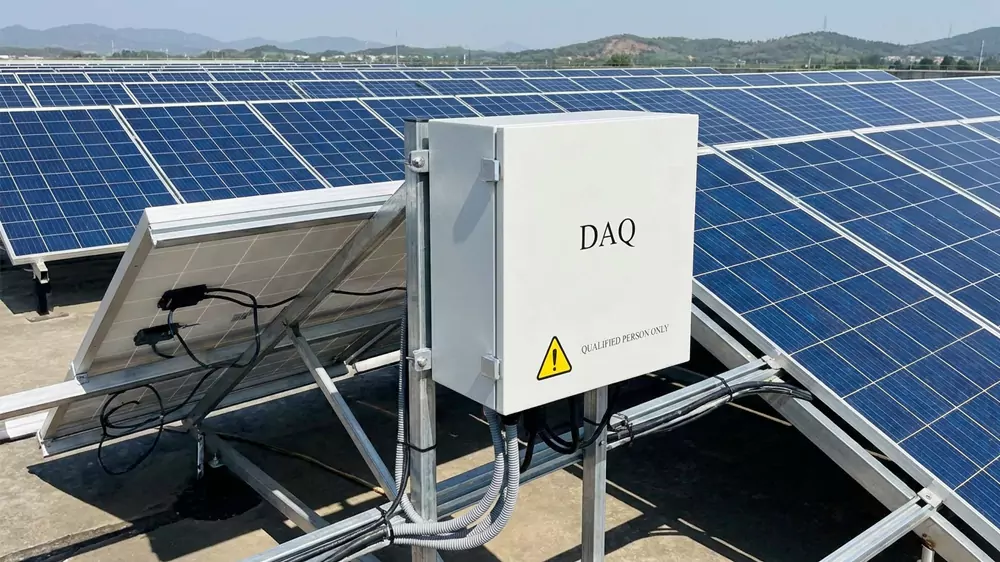
A Solar Control Communication Cabinet is a field-level or system-level control and communication device used in intelligent photovoltaic installations, particularly solar tracking systems. Its primary role is to provide a structured connection between tracker controllers, communication networks, and upper-level monitoring or operation platforms.
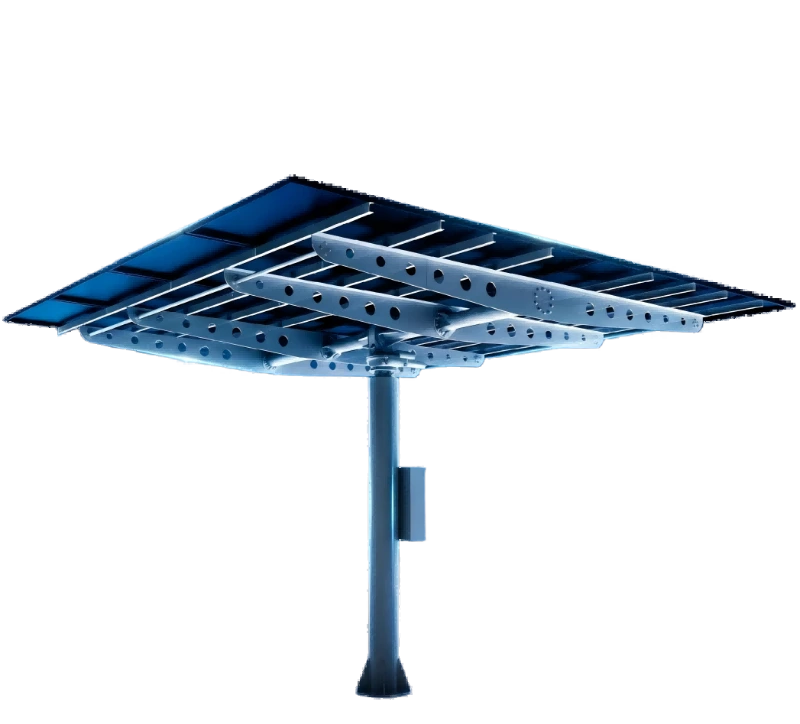
In a typical tracking architecture, individual tracker rows use local controllers to manage motors, sensors, and tracking positions. However, hundreds or thousands of trackers cannot operate efficiently as isolated units. They need a communication layer capable of collecting information, distributing commands, and supporting coordinated operation. This is where the communication cabinet becomes important.
Modern network control units can connect multiple tracker control units, collect operating information, and exchange commands with centralized monitoring systems. Ruitai's product portfolio, for example, includes intelligent tracker controllers, intelligent communication boxes, and SCADA operation and maintenance software as interconnected parts of its photovoltaic control solution.
Why Does Communication Matter in Solar Tracking?
A solar tracking system is a distributed automation system. Every tracker may generate operating data and require instructions, while the plant-level platform needs visibility into the status of the overall installation.
Without stable communication, operators may face delayed information, incomplete status visibility, difficult fault diagnosis, or excessive dependence on manual inspection. These issues become increasingly important as project capacity grows.
Communication also affects how quickly a system can react to environmental conditions. Strong wind, heavy snow, rain, or other abnormal conditions may require the tracking system to enter a predefined protective mode. A properly designed communication architecture helps distribute those instructions efficiently and allows operating status to be monitored from a centralized location.
For large-scale PV projects, the goal is therefore not simply to move panels. The goal is to create a coordinated control network in which field equipment, communication devices, monitoring software, and operators can work together.
How the Communication Cabinet Fits Into a PV Tracking System
A practical photovoltaic tracking architecture can be understood as several connected layers. Each layer has a different responsibility, but their performance depends on effective communication.
| System Layer | Main Responsibility | Typical Project Concern |
|---|---|---|
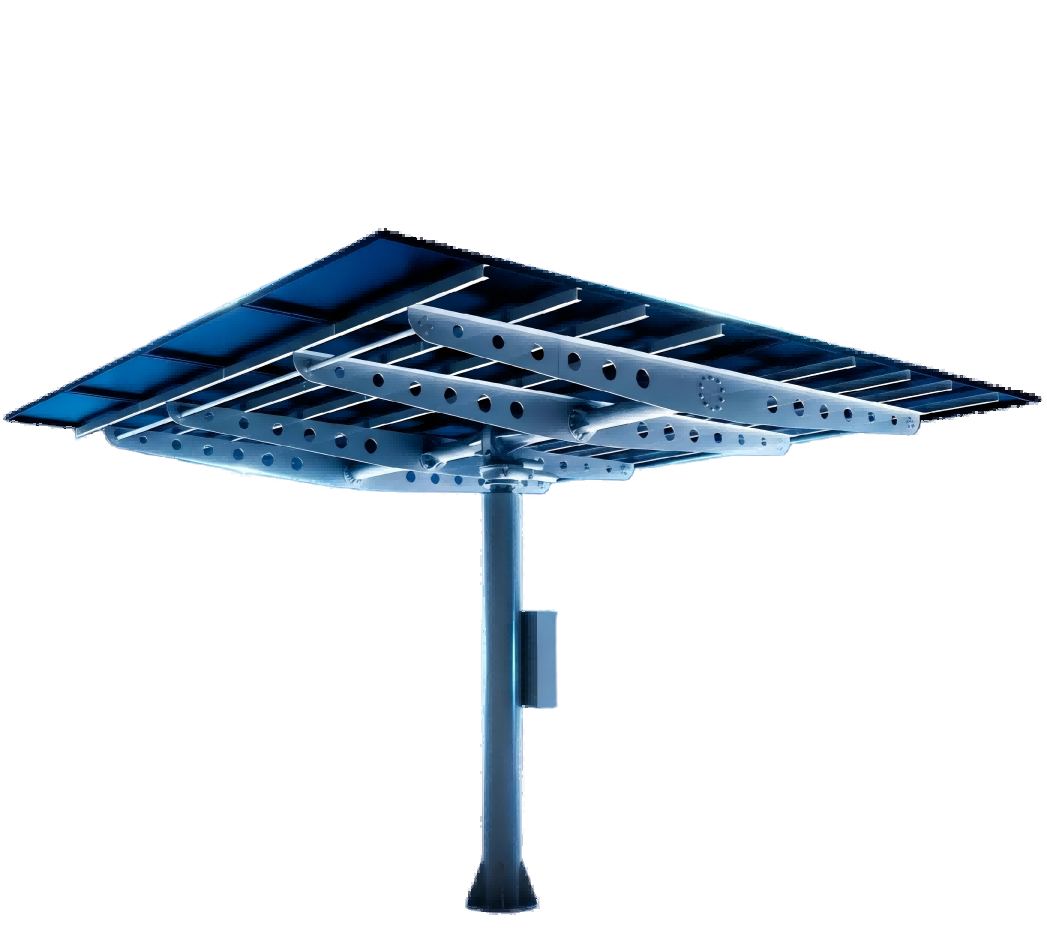
| Tracker Structure | Provides the mechanical movement platform for PV modules | Mechanical reliability and correct positioning |
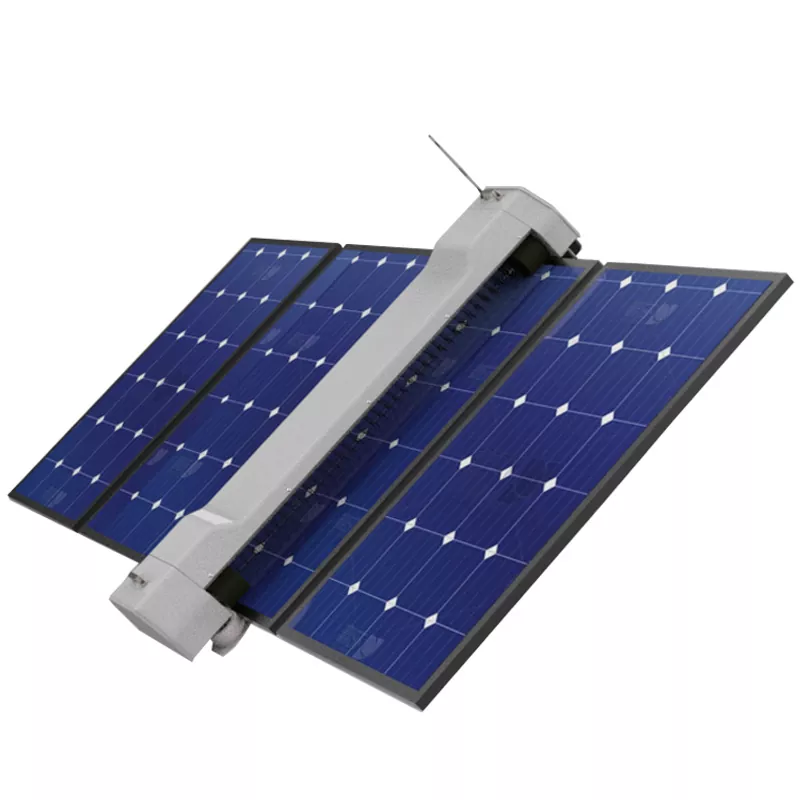
| TCU / Tracker Controller | Controls tracker movement and local operating logic | Position accuracy and motor control |
| Solar Control Communication Cabinet / NCU | Connects multiple field controllers and exchanges system information | Stable communication and coordinated control |
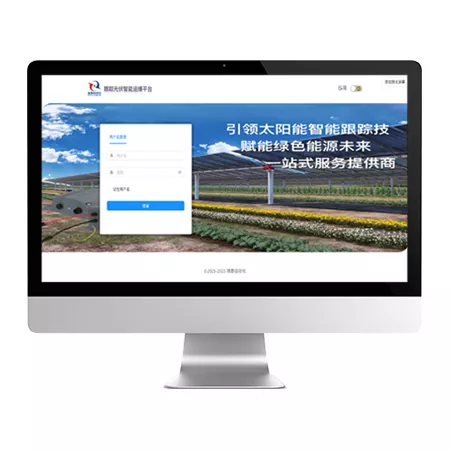
| SCADA Platform | Provides centralized monitoring, analysis, alarms, and management | Plant-wide visibility and O&M efficiency |
This layered structure separates local control from network-level coordination. Ruitai describes its NCU as a central communication hub that connects tracker-level controllers with upper-level monitoring systems, while its SCADA platform provides centralized operation, monitoring, and data analysis.
Core Functions That Solve Common Solar Plant Challenges
The value of a Solar Control Communication Cabinet is best understood by looking at the practical problems it addresses. A suitable system can provide several important functions.
- Data collection: operating information from multiple tracker controllers can be gathered into a coordinated communication network.
- Command transmission: control instructions can be distributed to field-level equipment without requiring individual manual operation.
- Remote monitoring: system status can be made available to centralized operation and maintenance platforms.
- Fault visibility: abnormal operating information can help operators identify equipment requiring inspection.
- Protective coordination: predefined operating strategies can support responses to environmental conditions such as strong wind or heavy snow.
- Network management: organized communication reduces the complexity of managing large numbers of distributed tracking devices.
- Data traceability: continuous communication creates a more complete operational record for analysis and maintenance.
These functions are particularly valuable when a project moves beyond a small installation. The larger the plant, the more difficult it becomes for operators to rely on local inspection alone. Centralized communication provides a practical foundation for scalable management.
Key Benefits for Solar Developers and Operators
From a buyer's perspective, the most important question is not simply whether a communication cabinet can transmit data. The more useful question is whether it can solve real operational problems over the lifetime of the PV project.
-
Reduced dependence on manual inspection
Centralized information allows operators to understand system conditions without physically checking every tracker location. -
Faster identification of abnormal conditions
When communication and monitoring are properly integrated, unusual operating information can be identified earlier and directed to the appropriate maintenance team. -
More coordinated tracker management
A communication layer enables multiple tracker controllers to work within a common operating strategy rather than functioning as completely independent devices. -
Improved scalability
A well-planned network architecture is easier to extend when a solar project contains a large number of tracker rows. -
Better O&M visibility
Communication with SCADA or other monitoring platforms can provide operators with a more complete view of equipment status and system performance.
What Should Buyers Consider Before Deployment?
Selecting a Solar Control Communication Cabinet requires more than checking the product name and basic communication interface. Project conditions can vary significantly between utility-scale solar farms, commercial installations, and sites located in harsh climates.
| Evaluation Area | Questions to Ask |
|---|---|
| Compatibility | Can the cabinet communicate with the project's tracker controllers, sensors, SCADA platform, and other equipment? |
| Communication | Does the system support the communication architecture required by the project, such as Ethernet, RS485, fiber, or wireless networking? |
| Environmental Conditions | Can the equipment operate reliably under the site's temperature, humidity, dust, rain, wind, and other conditions? |
| Protection | Does the enclosure and electrical design provide suitable protection for outdoor or demanding installation environments? |
| Scalability | Can the architecture support the required number of tracker controllers and future project expansion? |
| Maintenance | Can operators diagnose communication or equipment problems efficiently without excessive field intervention? |
| Integration | Can the communication cabinet work smoothly with the project's overall monitoring and control platform? |
These considerations become especially important when the project is located in a region with severe temperature changes or difficult site access. Technical requirements should therefore be defined according to the actual project environment rather than relying only on generic equipment specifications.
Environmental Reliability in Real Solar Projects
Solar equipment is exposed to environmental conditions for long periods. Communication equipment installed in or near a solar field may encounter heat, cold, moisture, dust, electrical interference, and weather-related risks.
For this reason, enclosure protection, temperature tolerance, electrical protection, communication stability, and appropriate installation practices are important parts of system reliability. Ruitai's published service information describes IP65/IP66 protection, a stated operating range of -40°C to +85°C, lightning protection, anti-interference measures, and protective functions such as storm stow and anti-collision strategies within its broader tracking control solutions.
However, buyers should always confirm the exact specifications of the cabinet model being supplied. Project conditions, installation methods, network architecture, and local environmental requirements can influence the appropriate configuration.
Communication Cabinets and Long-Term O&M
Operation and maintenance is one of the most important lifecycle considerations for a solar project. A system that performs well during commissioning but is difficult to diagnose later can create unnecessary operational costs.
A communication cabinet supports O&M by creating a bridge between distributed field devices and centralized software. Instead of treating every tracker as an isolated asset, operators can review information through a structured network.
This architecture can also support a transition from reactive maintenance toward more information-driven maintenance. When equipment status, alarms, communication conditions, and historical operating data are available, maintenance teams have more information to determine where attention is required.
Ruitai's published SCADA solution includes real-time data collection, monitoring, fault warning, and data analysis functions, demonstrating how communication infrastructure can become part of a broader digital operation and maintenance workflow.
Suzhou Ruitai Automation Technology Co., Ltd. and Intelligent PV Control
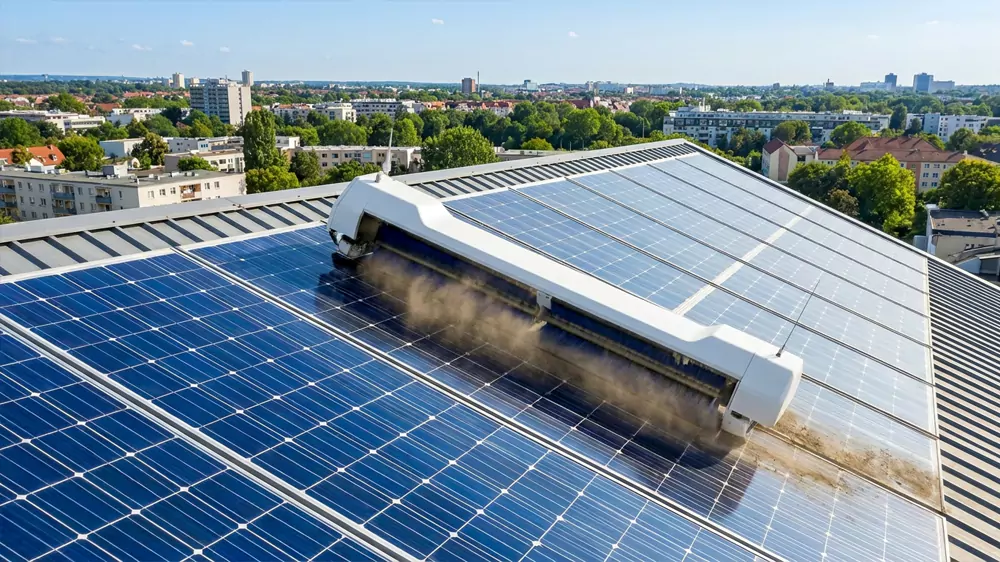
Suzhou Ruitai Automation Technology Co., Ltd. focuses on intelligent photovoltaic tracking and control technology. Its product portfolio includes intelligent tracking controllers, intelligent communication units, SCADA operation and maintenance software, and photovoltaic cleaning equipment. The company's public materials describe an integrated approach covering product development, manufacturing, installation and commissioning, and after-sales service.
Within this product architecture, its intelligent communication box RT-COM-V1 is designed to provide communication and coordinated control functions for photovoltaic tracking applications. Published specifications include 220 VAC power supply, low daily power consumption, and RS485/Ethernet communication interfaces, while the system also supports operating modes related to wind, rain, snow, and night protection.
For project developers, the broader value lies in connecting the communication layer with tracker controllers and monitoring software. This creates a more coherent architecture in which field-level movement, network communication, and plant-level monitoring can work together.
Ruitai also states that its solutions have been deployed across multiple regions and that it provides customized configurations according to project requirements, geographical conditions, environmental factors, communication methods, and monitoring needs.
Frequently Asked Questions
Its main purpose is to connect and coordinate photovoltaic tracking equipment through a structured communication network. It can collect field information, transmit commands, and connect tracker-level controllers with centralized monitoring systems.
No. A tracker controller generally manages the movement and local operation of an individual tracker or tracker group, while the communication cabinet or NCU focuses more on network-level communication and coordination between field controllers and upper-level systems.
Yes, communication units are commonly designed as an intermediate layer between field controllers and centralized monitoring software. The exact connection method depends on the equipment architecture, communication protocols, and project configuration.
Large solar farms may contain a significant number of distributed trackers. Reliable communication helps operators collect information, distribute control instructions, identify abnormal conditions, and manage equipment without depending entirely on physical inspection.
It depends on the specific product design and configuration. Buyers should verify enclosure protection, operating temperature, electrical protection, communication stability, and other environmental specifications against the actual project conditions.
Important points include tracker compatibility, communication interfaces, network topology, power supply, environmental conditions, protection requirements, number of connected devices, SCADA integration, installation method, maintenance access, and after-sales technical support.
Customization may be possible depending on the manufacturer and project requirements. Large projects may require different communication methods, network structures, monitoring configurations, or environmental protection levels, so technical requirements should be confirmed before production.
Conclusion
A Solar Control Communication Cabinet is more than a box for connecting cables. In an intelligent PV tracking system, it serves as an important communication and coordination layer between tracker controllers, field equipment, and centralized monitoring platforms.
For solar developers, EPC contractors, system integrators, and O&M teams, the key is to evaluate communication equipment according to the complete project architecture. Compatibility, communication reliability, environmental protection, scalability, monitoring integration, safety functions, and long-term maintenance should all be considered before deployment.
As photovoltaic projects continue to become larger and more automated, reliable communication will remain an essential part of efficient system management. A well-designed communication architecture can make distributed tracker equipment easier to monitor, coordinate, diagnose, and maintain throughout the project lifecycle.
Build a Smarter PV Tracking Communication System
Looking for a reliable Solar Control Communication Cabinet for a utility-scale solar farm, commercial PV project, or intelligent tracking application? Suzhou Ruitai Automation Technology Co., Ltd. provides photovoltaic tracking control and communication solutions designed around real project requirements.
From tracker-level control to communication networking and centralized monitoring, a properly matched solution can help create a more connected and manageable solar power system. If you are planning a new PV project or upgrading an existing tracking system, contact us to discuss your technical requirements, site conditions, communication architecture, and customized solution.